
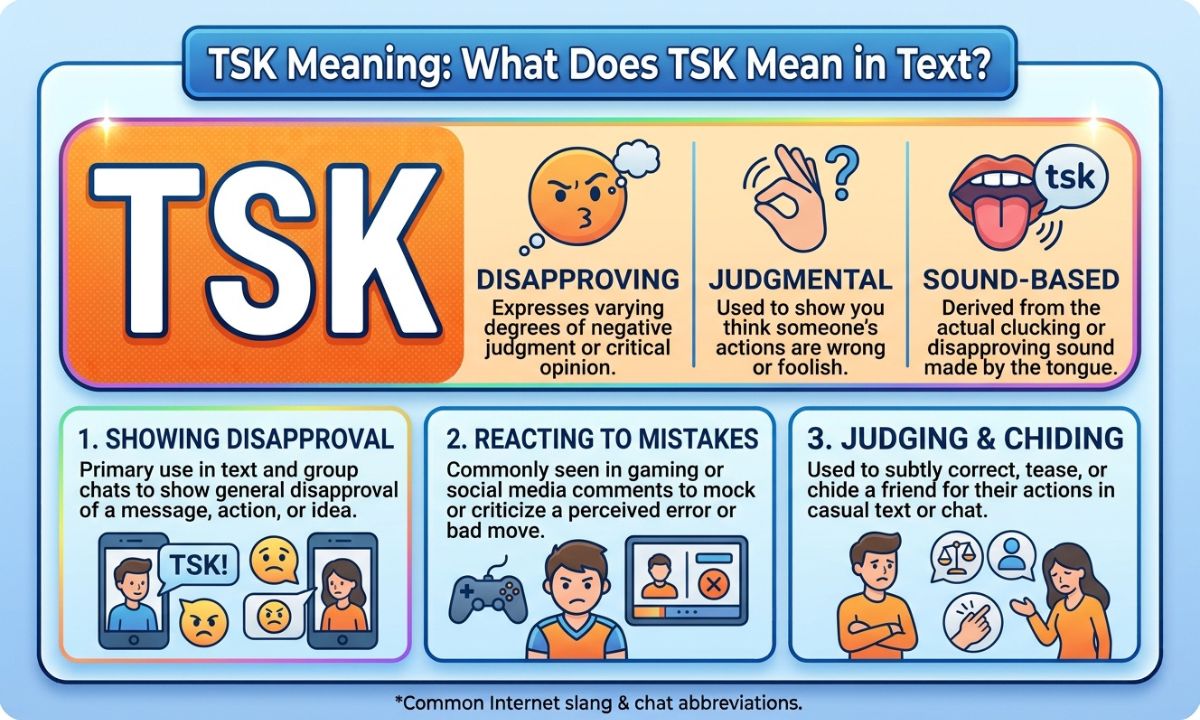
Have you ever seen someone reply with just “tsk” in a text or comment and wondered what it means? This small word carries a lot of feeling. It is not a real word. It is actually a sound that people write out in text form. You will see it a lot on social media, in group chats, and in comment sections.
The word “tsk” usually shows annoyance, disappointment, or mild frustration. People make this clicking sound with their tongue when they are upset about something small. When you turn that sound into text, it becomes “tsk” or sometimes “tsk tsk.” It works like a short, silent sigh. You use it when words feel like too much effort.
In this guide, we will break down the real meaning of TSK in simple terms. You will learn how people use it in different situations, like texting, Twitter, and TikTok. We will also show you the difference between “tsk” and “tsk tsk,” and when each one fits best. By the end, you will know exactly how and when to use this small but powerful word.
What Does TSK Mean in Text & Chat?
TSK is a short word people type to show a small sound. It is the sound you make when you click your tongue against the top of your mouth. People use it to show they feel annoyed, disappointed, or a little upset about something small.
You do not say TSK out loud in most cases. You type it. It shows up in texts, comments, and posts when someone wants to react fast without writing a full sentence.
Quick Examples
Here are some quick examples so you can see TSK in action right away:
- “You forgot your homework again? Tsk.”
- “Tsk, why is the WiFi so slow today?”
- “He said he would call and never did. Tsk tsk.”
- “Tsk… I knew this would happen.”
In each example, TSK replaces a bigger reaction. It is short, but it still says a lot.
TSK Meaning in Text Slang
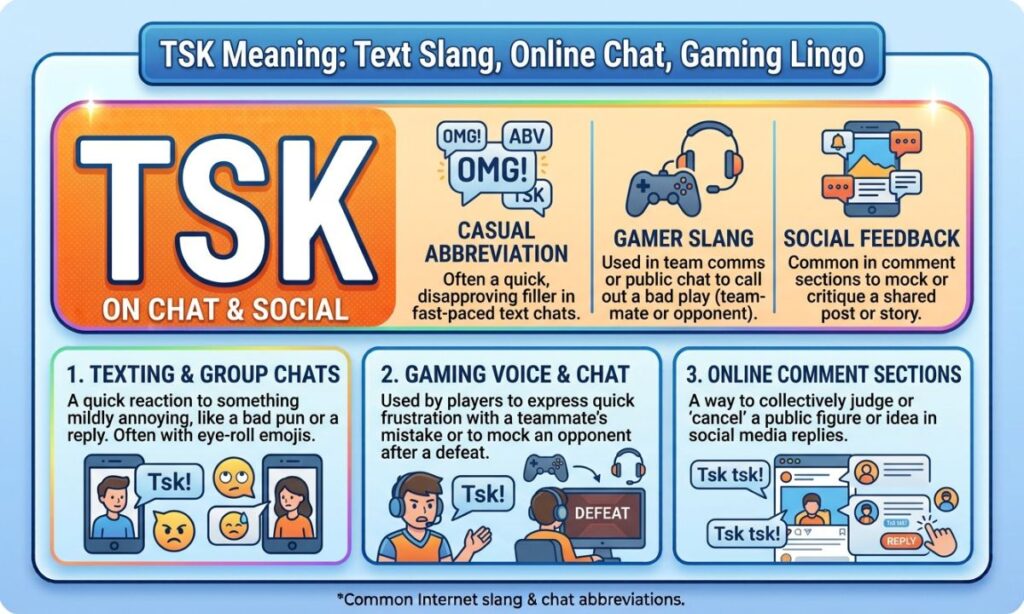
In text slang, TSK is a sound word, also called an interjection. It is not built from other words. It copies a real mouth sound and turns it into letters so people can “hear” it while reading.
People use TSK when talking feels like too much work. Instead of typing “I am annoyed” or “that was disappointing,” they just type “tsk.” It gets the feeling across in one small word.
TSK Meaning in Gen Z
Gen Z uses TSK a lot in texting and on social media. For this group, TSK often means light annoyance mixed with humor. It is rarely used for anything serious.
Younger users also mix TSK with other trends, like short reaction memes, sarcastic captions, and playful teasing. TSK fits right into that style because it is quick, funny, and easy to use.
Full Form, Stands For & Short Meaning of TSK
Many people search online wondering if TSK stands for something, like an abbreviation. This section clears that up in simple words.
Short Meaning of TSK
The short meaning of TSK is: a written version of a tongue-click sound that shows mild annoyance or disappointment. That is it. There is no hidden meaning behind the letters.
Does TSK Stand for Anything?
No, TSK does not stand for anything. It is not short for a phrase, and it is not an acronym like “LOL” or “BRB.” It is simply a sound spelled out in letters.
Some people online confuse TSK with real acronyms because it looks like one. But TSK is different. It is a sound-based word, not a word made from the first letters of other words.
Why People Like Using It
People like TSK because it is:
- Quick to type
- Easy to understand
- Not too harsh
- Good for light teasing
- Useful when words feel like too much effort
It gives a reaction without starting an argument. That is one big reason it has stayed popular for so long.
TSK Meaning From a Girl in Text
When a girl sends “tsk” in a text, it usually means mild annoyance, playful teasing, or gentle disappointment. It is rarely meant to be mean. Most of the time, it is a soft way to react, especially in casual or friendly chats.
Context matters a lot here. If she is joking around before or after the “tsk,” it is playful. If the chat feels tense, it might mean real frustration.
Origin, History & First Known Use of TSK
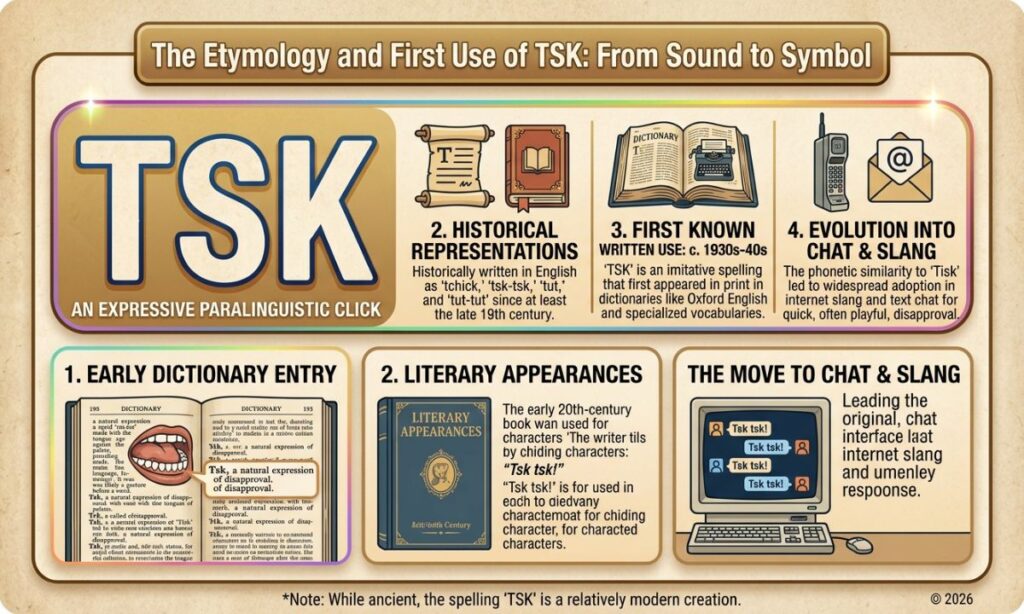
TSK is not a new word. It has been around for a long time, both as a sound and as a written word in books and comics.
Historical Background
The sound “tsk” has existed in many spoken languages for a very long time. People made this clicking sound naturally to show disapproval, long before texting existed. Writers even added “tsk tsk” in old comic strips and books to show a character’s disappointed reaction.
Internet & Texting Era
When texting became common, “tsk” moved easily from books and comics into phone messages. It fit perfectly because texting needed short, quick ways to show feelings without long sentences.
As chat apps and social media grew, TSK spread even faster. It became a normal part of everyday online talk.
Why It Survived Online
TSK survived online because it works everywhere. It fits in a serious chat, a funny meme, or a quick comment. It does not need explaining, and almost everyone understands it right away.
Pro tip from real chatting experience: TSK works so well online because it takes less than one second to type but still shows a full reaction. In fast chats, that speed matters a lot.
How People Use TSK in Daily Conversations
TSK shows up in many everyday situations. It usually appears in short bursts, not long paragraphs.
Common Situations
People often use TSK when:
- Someone makes a small mistake
- A plan does not work out
- Someone is being silly or dramatic
- A friend is late again
- Something annoying but small happens
When Someone Makes a Mistake
If a friend spills a drink or forgets something, a quick “tsk” shows mild annoyance without being harsh. It says “that was a little careless” in a soft way.
When Someone Acts Silly
TSK also fits when someone acts goofy or over the top. It works like a playful eye-roll typed into words.
Friendly Teasing
Close friends often use TSK to tease each other. In this case, it is not real anger. It is just a fun, light comment between people who know each other well.
Light Disapproval
TSK can also show light disapproval, like when someone breaks a small rule or habit. It is a gentle way to say “I am not fully happy about this,” without sounding angry.
Tone Matters
The real meaning of TSK depends heavily on tone and context. The same word can mean:
- Playful teasing
- Mild disappointment
- Sarcastic humor
- Real, quiet frustration
Reading the full conversation, not just the word TSK, helps you understand what the sender really means.
TSK Meaning Across WhatsApp, Instagram, TikTok & Snapchat
TSK is used across almost every chat app and social platform, but the feel can change slightly depending on where it is used.
| Platform | Common Use of TSK |
| Quick personal reactions in one-on-one or group chats | |
| Comments on posts, reels, or stories showing mild annoyance | |
| TikTok | Comment sections reacting to funny or relatable videos |
| Snapchat | Short chat replies, often paired with emojis |
On WhatsApp, TSK usually shows up in personal or family group chats. It often reacts to small mistakes, delays, or funny mishaps shared in the chat.
On Instagram, TSK often appears in the comments under posts or reels. People use it to react to something relatable, silly, or slightly annoying in a video or photo.
TikTok
TikTok comment sections use TSK a lot for humor. Viewers type “tsk” under videos showing awkward moments, fails, or dramatic reactions, almost like a written laugh mixed with disapproval.
Snapchat
On Snapchat, TSK often appears in quick chat replies, paired with an emoji like 🙄 or 😑. It fits Snapchat’s fast, casual messaging style very well.
Different Meanings of TSK in Other Fields
Outside of texting, TSK can mean something completely different. It is important not to mix these up.
In Medicine
In medicine, TSK can be short for certain medical terms or test names, depending on the specific field or country. These meanings have nothing to do with texting slang and only appear in professional or clinical settings.
In Technology
In technology and computing, TSK sometimes appears as an abbreviation inside technical documents, tools, or company names. Again, this use is completely separate from the texting meaning.
In Gaming
In gaming communities, TSK can be used as a clan tag, team name, or username. Some gaming groups use “TSK” as short branding, unrelated to the tongue-click sound.
In Entertainment
In entertainment, TSK may appear as an abbreviation for a show, event, or project name. This meaning depends entirely on the specific show or context being discussed.
Simple rule: If TSK appears in a casual text or chat, it almost always means the tongue-click sound. If it appears in a formal, medical, technical, or branded context, it likely means something else entirely.
Common Confusions, Mistakes & Wrong Interpretations
Even though TSK is simple, people still get confused about it. Here are the most common mistakes.
Common Mistakes
People often misunderstand TSK in a few key ways.
Thinking It Is an Acronym
Many people assume TSK stands for a phrase because it looks like other texting acronyms. As explained earlier, it does not stand for anything. It is a sound, not short for a phrase.
Assuming It Is Always Rude
Some people think TSK is always rude or angry. In real conversations, it is usually mild and often playful, not harsh at all.
Confusing It With “TSM” or “TYSK”
TSK sometimes gets mixed up with similar-looking short texts like “TSM” (too much) or other rare short forms. These are different terms with different meanings, so it is important not to confuse them.
Misreading Tone
Since text has no voice, tone can be misread easily. A playful “tsk” can accidentally feel harsh if the reader is already upset or stressed.
Overusing It
Using TSK too often in every message can make texts feel repetitive or overly dramatic. Like most slang, it works best in small doses.
Similar Terms, Alternatives & Related Slang
TSK has several close cousins in texting slang. Knowing the differences helps you pick the right word for the right moment.
Similar Expressions
Some common alternatives to TSK include:
- SMH (shaking my head)
- Sigh
- Ugh
- Meh
- Eye-roll emoji 🙄
Differences Between Them
Even though these expressions feel similar, they are not exactly the same.
TSK vs SMH
| Term | Meaning | Common Feeling |
| TSK | A short click sound showing mild annoyance | Light, quick reaction |
| SMH | “Shaking my head,” showing disbelief or disappointment | Slightly stronger reaction |
TSK feels lighter and quicker, almost like a quick sound bite. SMH often carries a bit more disbelief behind it.
TSK vs Sigh
| Term | Meaning | Common Feeling |
| TSK | A sharp, short sound of annoyance | Fast, small reaction |
| Sigh | A long breath showing tiredness or sadness | Slower, heavier feeling |
“Sigh” feels more tired and drawn out, while “tsk” feels sharp and instant.
Related Slang Examples
Here are quick examples showing how these terms compare in real texts:
- “Tsk, not again.” (quick, light annoyance)
- “SMH, I can’t believe he did that.” (stronger disbelief)
- “Sigh, today was so long.” (tired, heavier feeling)
TSK Meaning From a Guy in Text
When a guy types “tsk,” it usually carries the same casual meaning as anyone else using it: mild annoyance or playful teasing. Guys often use it in short, blunt messages, sometimes without any extra emojis or explanation.
As with any sender, the surrounding words and past conversation history give the clearest picture of the real meaning.
Examples of TSK in Real Chat Situations
Seeing TSK used in different chat settings makes the meaning even clearer. Here are real-style examples across common situations.
Friendly Chats
- “Tsk, you always order the same thing.”
- “Tsk, you’re late again lol.”
Relationship Chats
- “Tsk, you forgot our plan again.”
- “Tsk tsk, you really thought I’d forget your birthday joke?”
Gaming Chats
- “Tsk, missed that shot by one second.”
- “Tsk, lag again right when I needed it.”
Social Media Comments
- “Tsk, why does this always happen to me too 😂”
- “Tsk, this reminded me of my whole week.”
Funny Examples
- “Tsk, my code broke again for no reason.”
- “Tsk, my plant died even though I only forgot it once… okay maybe twice.”
From real chatting experience, TSK works best paired with a little humor. It softens the message and keeps the mood light, even when pointing out a mistake.
How to Reply When Someone Says TSK
Knowing how to reply to a “tsk” keeps the conversation smooth and friendly. Here are some easy reply styles.
Funny Replies
- “Tsk yourself first 😂”
- “Rude, but fair.”
Playful Replies
- “Okay okay, my bad!”
- “Don’t tsk me, tsk the WiFi.”
Serious Replies
- “Sorry, I’ll fix it.”
- “Yeah, that was on me.”
Casual Responses
- “Lol I know, I know.”
- “Relax, it’s not that deep.”
The best reply depends on the tone of the chat. In friendly chats, humor works well. In more serious chats, a short, honest reply keeps things respectful.
Is TSK Still Popular? Trends & Online Usage
TSK remains a common part of online chatting today. It has not faded out, even as new slang words keep appearing.
Why It Remains Popular
TSK stays popular because it is short, simple, and flexible. It fits almost any casual conversation without needing extra explanation.
Popular Among Different Ages
While Gen Z uses TSK a lot in memes and comments, older users also use it in everyday texting. It crosses age groups easily because the sound itself is universal.
Modern Internet Usage
Today, TSK often appears paired with emojis, GIFs, or short videos to boost the reaction. It has become part of a bigger toolbox of quick internet expressions, alongside SMH, sigh, and eye-roll emojis.
Final words
Have you ever seen someone reply with just “tsk” in a text or comment and wondered what it means? This small word carries a lot of feeling. It is not a real word. It is actually a sound that people write out in text form. You will see it a lot on social media, in group chats, and in comment sections.
The word “tsk” usually shows annoyance, disappointment, or mild frustration. People make this clicking sound with their tongue when they are upset about something small. When you turn that sound into text, it becomes “tsk” or sometimes “tsk tsk.” It works like a short, silent sigh. You use it when words feel like too much effort.
In this guide, we will break down the real meaning of TSK in simple terms. You will learn how people use it in different situations, like texting, Twitter, and TikTok. We will also show you the difference between “tsk” and “tsk tsk,” and when each one fits best. By the end, you will know exactly how and when to use this small but powerful word.
“FAQs”
What does TSK mean in texting?
TSK is a written version of a tongue-click sound. People use it to show mild annoyance, disappointment, or light frustration in a text.
Is TSK rude?
Not usually. TSK is mostly playful or mildly annoyed, not harsh or mean. It only feels rude if the chat’s tone is already tense or serious.
Does TSK stand for anything?
No. TSK is not an acronym or short form of any phrase. It is simply the sound of a tongue click spelled out in letters.
What does “tsk tsk” mean?
“Tsk tsk” is a doubled-up version of TSK. It shows a bit more disappointment or teasing than a single “tsk,” almost like a soft scolding.
Is TSK popular on TikTok?
Yes. TSK shows up a lot in TikTok comments, especially under funny, awkward, or relatable videos. It works like a quick, written reaction to what’s happening on screen.
Can TSK be sarcastic?
Yes, very often. TSK fits well with sarcasm because it can pair a light tone with a pointed comment, like teasing a friend for doing something predictable.

Hi, I’m Shahid, a passionate content writer and blogger dedicated to creating easy-to-understand, well-researched, and SEO-friendly content. I specialize in explaining the meanings of words, phrases, names, internet slang, symbols, and everyday expressions in a simple and engaging way.