
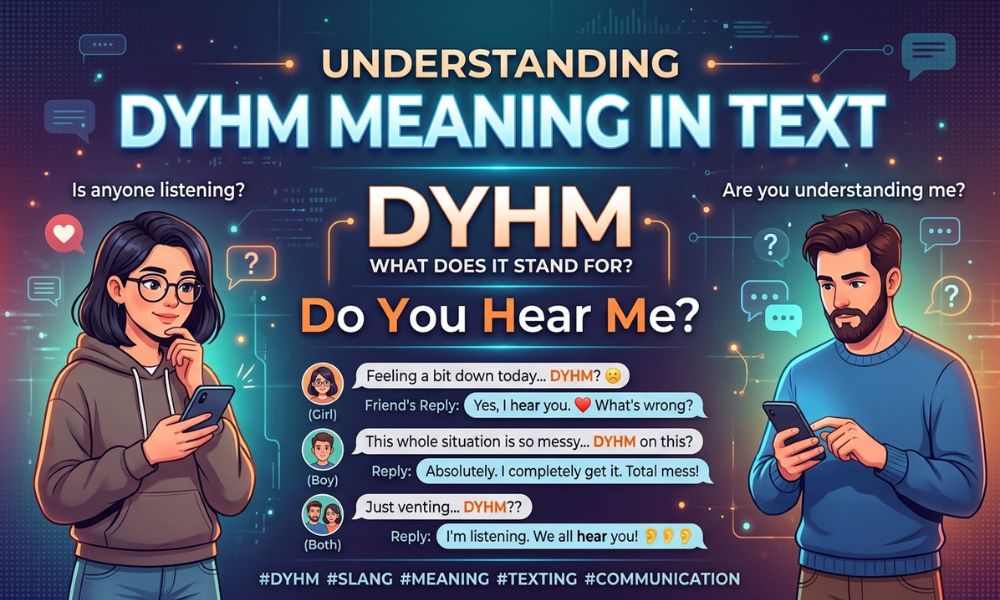
Have you ever seen DYHM in a text and felt confused? This short slang term shows up a lot in chat apps and social media posts. It stands for “Do You Hate Me?” People use it when they feel unsure about a friendship or relationship. It often shows worry, sadness, or a need for reassurance from the other person.
DYHM is common among teens and young adults on platforms like Instagram, Snapchat, and TikTok. It helps people express deep feelings in a quick and simple way. Instead of typing a long message, users type this short acronym to ask a big question fast. It saves time but still shows real emotion behind the words.
Knowing slang like DYHM helps you understand modern digital conversations better. It also helps you reply in the right way when someone sends it to you. Texting slang changes fast, and terms like this are part of everyday online communication. Learning these terms keeps you connected with current trends in chat culture.
What Does DYHM Mean in Text?
DYHM is a short text slang that stands for “Do You Hate Me?” People type it when they feel unsure about how someone feels about them. It is a fast way to ask a big, emotional question without writing a long sentence.
You will mostly see DYHM in texts, DMs, and comments between friends or people in a relationship. It pops up after an argument, a long silence, or a moment of doubt. The person sending it usually feels a little nervous or insecure.
Here is a quick snapshot for anyone who wants the answer in one glance:
| Term | Full Form | Common Use |
| DYHM | Do You Hate Me | Asking if someone is upset or angry with you |
This slang is short, emotional, and personal. It is not used for business chats or formal writing. It belongs to casual talk between people who know each other well.
DYHM Meaning in Text Slang
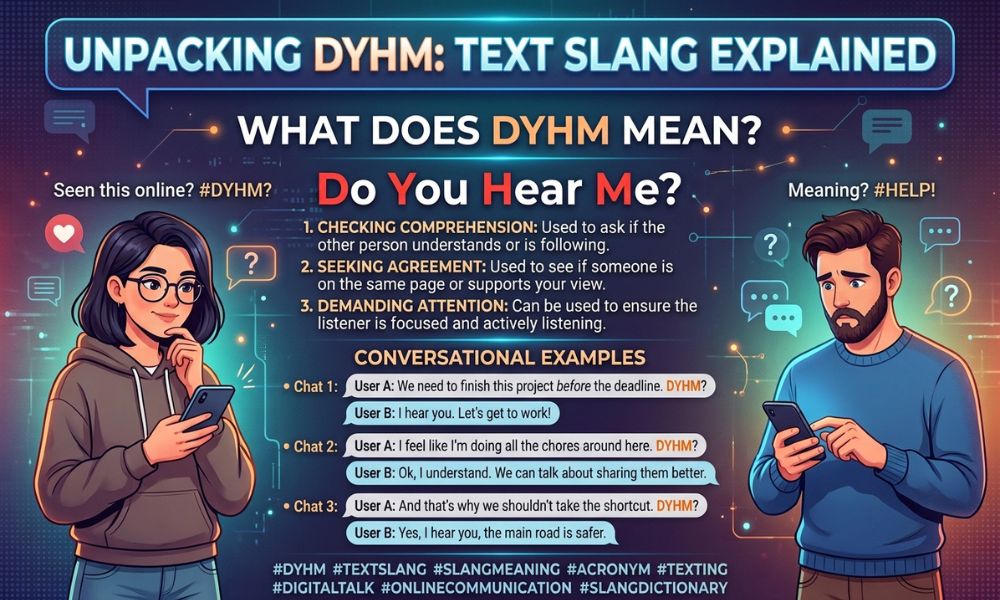
In texting slang, DYHM works like a mini check-in. It is a way of saying, “I feel like something is wrong between us. Can you tell me the truth?”
Text slang like this became popular because typing on phones takes time. Young people started shortening common phrases into acronyms to chat faster. DYHM is one of hundreds of these short forms, sitting in the same family as NGL (not gonna lie), TBH (to be honest), and IDK (I don’t know).
What makes DYHM special is its emotional weight. Most slang acronyms save time on simple facts. DYHM saves time on a hard feeling. That is why it often appears in longer, personal conversations rather than quick jokes.
Pro tip: If a friend sends you DYHM, do not reply with just “no.” A short answer can feel cold. A caring, honest reply works much better, and we will cover exactly how to respond later in this article.
Background / Origin Of DYHM
Nobody can point to one exact day when DYHM was invented. Like most texting slang, it grew naturally from how people write on phones. As texting and instant messaging apps became popular in the 2000s and 2010s, people started shrinking common questions into letters.
“Do you hate me” is a phrase that comes up often between friends, siblings, and couples. Someone eventually shortened it to save time, and it spread the same way most internet slang spreads:
- One person uses it in a text or comment
- Friends see it and copy it
- It shows up on Twitter, Instagram, and forums
- It becomes common enough that people search for its meaning online
DYHM does not come from one movie, song, or celebrity. It is a grassroots slang term, built by regular texters who wanted a quick way to express doubt or worry. This is common with emotional acronyms — they grow from real conversations, not marketing or media.
Usage Of DYHM in Different Contexts
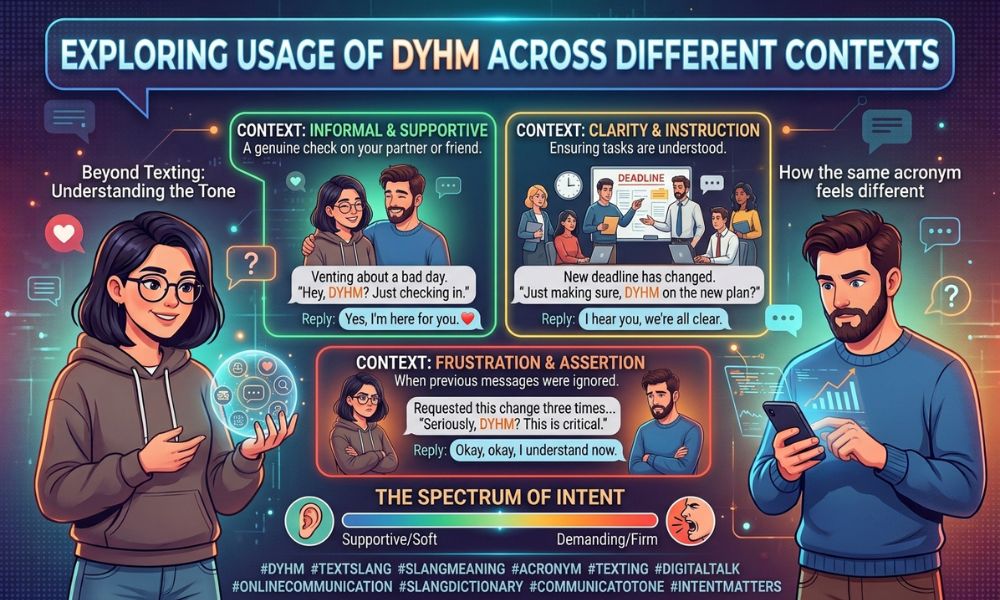
General Usage
In everyday chatting, DYHM shows up in a few common situations:
- After an argument — “You seemed quiet after we fought. DYHM?”
- After being ignored — “You didn’t text back all day. DYHM?”
- After a mistake — “I know I messed up earlier. DYHM?”
- Out of the blue — Sometimes people send it just from personal anxiety, even without a clear reason.
In each case, the sender wants reassurance. They are not always accusing the other person of anything. Often, they just want to hear “no, of course not” to feel better.
Formal vs Informal Use
DYHM is strictly informal. It belongs in texting, DMs, and casual chats — never in professional or formal writing. Here is a simple breakdown:
| Setting | Should You Use DYHM? | Why |
| Texting a close friend | Yes | Casual and personal tone fits perfectly |
| Chatting with a partner | Yes | Common way to check on the relationship |
| Work email | No | Too casual and emotional for professional settings |
| School assignment | No | Slang does not belong in formal writing |
| Talking to a stranger online | Use with caution | Can feel too personal too soon |
Real-life tip: I have seen people accidentally use texting slang like DYHM in group chats that mix friends and coworkers. It can feel confusing or even awkward to people who are not close to you. Save it for private, personal conversations.
DYHM Meaning on Social Media Platforms
Social media has its own texting culture, and DYHM fits differently depending on the app. The tone, audience, and purpose change from platform to platform.
DYHM Meaning on TikTok
On TikTok, DYHM often shows up in comment sections and video captions, not just private messages. Creators sometimes make videos joking about the feeling of sending DYHM to a crush or friend after they go quiet.
- It’s used in relatable content about anxiety in friendships or relationships.
- Comment sections use it to relate to a video’s theme, like “me sending DYHM after one hour of no reply.”
- TikTok trends often turn small phrases like this into jokes and memes, softening the serious tone of the original meaning.
DYHM Meaning on Instagram
On Instagram, DYHM mostly appears in DMs and story replies. Someone might send it after noticing a friend didn’t like their post or reply to a story.
- It’s common in private conversations, not public captions.
- People use it in reply to a story that feels distant or cold.
- Some users add it as a joke reply to lighthearted content, showing playful insecurity rather than real worry.
DYHM Meaning on Facebook
Facebook tends to have an older user base, so DYHM shows up less often there compared to TikTok or Instagram. When it does appear, it is usually in:
- Messenger chats between friends or family
- Comments on posts where someone feels left out or ignored
- Group chats among younger Facebook users, like students or gaming groups
Pro tip from experience: Slang trends move fastest on TikTok, slightly slower on Instagram, and slowest on Facebook. If you want to understand a term’s newest, most playful use, check TikTok comments first.
Other Meanings in Different Fields
Most of the time, DYHM means “Do You Hate Me.” But like many short acronyms, it can carry different meanings depending on where you see it. Always check the context before assuming the meaning.
Some other possible expansions people have used online include:
- Do You Hear Me — used to ask if someone is paying attention or agrees
- Did You Hear Me — similar meaning, used after saying something important
- Do You Have Money — occasionally used as a joke in casual money-related texts
These uses are much rarer than “Do You Hate Me.” If DYHM appears after an emotional moment, a fight, or silence, it almost always means “Do You Hate Me.” If it shows up after a statement or question, it might mean “Do You Hear Me.”
Examples of DYHM Meaning in Text in Sentences
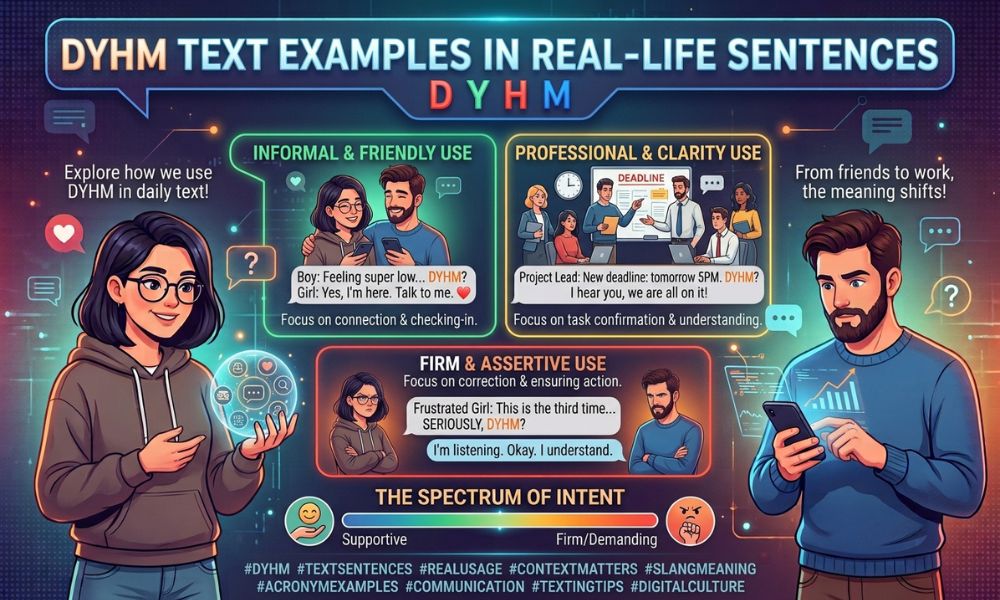
Seeing DYHM in real sentences makes the meaning much clearer. Here are natural examples from everyday texting:
- “I know I forgot your birthday. DYHM now?”
- “You’ve been quiet all day… DYHM?”
- “Be honest, DYHM because of what I said last night?”
- “I saw you left me on read. DYHM?”
- “Sorry for snapping earlier, DYHM?”
Each example shows the same pattern: something happened, and the sender feels unsure, so they ask directly using DYHM instead of a long explanation.
Common Misconceptions Of DYHM
There are a few mistaken ideas about DYHM that are worth clearing up.
Misconception 1: DYHM always means a serious problem. Not true. Many times, people send it out of mild anxiety, not because something is actually wrong.
Misconception 2: DYHM is rude or aggressive. Actually, it usually comes from a vulnerable, caring place. The sender wants connection, not conflict.
Misconception 3: Only teenagers use DYHM. While it is popular with teens and young adults, adults use it too, especially in close friendships and relationships.
Misconception 4: DYHM has only one meaning. As shown earlier, it can occasionally stand for other phrases, though “Do You Hate Me” remains the most common by far.
Similar Terms & Alternatives
DYHM belongs to a small family of texting acronyms that express doubt or emotional check-ins. Knowing these helps you understand modern chat culture better.
| Acronym | Full Form | Typical Use |
| DYHM | Do You Hate Me | Checking if someone is upset with you |
| WYD | What You Doing | Casual check-in, less emotional |
| RUOK | Are You Okay | Checking on someone’s well-being |
| DYLM | Do You Love Me | Asking about romantic feelings |
| ILY | I Love You | Expressing affection |
| NGL | Not Gonna Lie | Being honest about something |
DYHM stands out because it directly targets a negative emotion (hate), while most other similar acronyms focus on care or honesty.
DYHM Meaning in Urban Dictionary
Slang dictionaries like Urban Dictionary generally list DYHM the same way most texters use it: as a short form of “Do You Hate Me?” Definitions on these community-driven sites usually highlight the emotional, insecure tone behind the phrase.
Because Urban Dictionary is crowd-sourced, definitions can vary slightly between contributors. Some entries add a humorous or dramatic spin, showing how the term can be used both seriously and jokingly depending on the conversation.
What to remember: Crowd-sourced slang dictionaries are useful for checking meaning, but the real definition of DYHM always depends on the tone of the conversation it appears in.
DYHM Meaning in Funny Text
Not every DYHM message is serious. In fact, plenty of texts use it as a joke or playful exaggeration. Common funny uses include:
- After losing a game together: “You missed that shot… DYHM?? 😂”
- After a friend eats your snack: “You ate my last fries. DYHM.”
- Reacting to a silly meme: “Sent you this meme and no reply. DYHM?”
In these cases, DYHM is not about real hate at all. It is a playful way to react to small, everyday annoyances between friends.
DYHM Meaning in Text From a Girl
When a girl sends DYHM in a text, the meaning usually stays the same as general usage: she wants reassurance about how you feel about her. But the tone can shift depending on the relationship.
- From a friend: Usually casual, checking if things are okay after a small disagreement.
- From a crush or partner: Often carries deeper emotional weight, showing she values the relationship and fears distance.
- After no reply for a while: Can signal she feels ignored or anxious about the silence.
Real-life tip: If a girl sends you DYHM, the fastest way to hurt the moment is a short, dry reply like “no.” Take a few extra seconds to write something warm and clear. It shows you actually care about the answer, not just the reply.
How to Respond to DYHM Meaning in Text When Someone Uses It
Responding well to DYHM matters more than people think. A rushed or careless answer can make things worse, even if you truly do not hate the person.
Here are simple, effective ways to respond:
- Reassure them clearly — “No, not at all! I could never hate you.”
- Explain your behavior — “I was just busy, not upset with you.”
- Ask what’s wrong — “Of course not. Did something make you feel that way?”
- Add warmth — “No way, you mean a lot to me.”
- Avoid one-word replies — A simple “no” can feel dismissive, even if it’s true.
Pro tip: The goal of your reply is not just to answer the question. It is to make the other person feel heard and safe. A caring tone matters more than the exact words you choose.
Difference Between DYHM Meaning in Text and Similar Terms
It helps to compare DYHM with close terms so you never mix them up in conversation.
| Term | Meaning | Emotional Tone | Common Trigger |
| DYHM | Do You Hate Me | Insecure, worried | Silence, argument, mistake |
| DYLM | Do You Love Me | Hopeful, romantic | Wanting affection confirmed |
| RUOK | Are You Okay | Caring, concerned | Checking on someone’s mood |
| WYD | What You Doing | Neutral, casual | Simple curiosity |
The biggest difference is emotional direction. DYHM asks about a possible negative feeling (hate), while terms like RUOK and DYLM lean toward care and affection. Knowing this difference helps you choose the right reply tone instantly.
Relevance in Online Conversations & Dating Apps
DYHM plays a bigger role in online dating and messaging apps than many people realize. In digital relationships, where body language and tone of voice are missing, small silences can feel much bigger than they really are.
On dating apps, DYHM often appears when:
- A match takes a long time to reply
- A conversation suddenly goes quiet after a deep topic
- Someone feels nervous about how a joke or comment landed
Because online chats lack facial expressions and tone, misunderstandings happen easily. A joke can look like an insult in plain text. This is exactly why terms like DYHM exist — to quickly check emotional temperature without writing a long paragraph.
Practical advice: If you are chatting on a dating app and sense the other person might feel insecure, a proactive message like “hey, all good, just got busy!” can prevent them from ever needing to send DYHM in the first place.
Good digital communication is often about closing small gaps before they turn into doubt.
Final Thoughts
DYHM is a small acronym, but it carries real emotional meaning. At its core, it simply means “Do You Hate Me,” a quick way for someone to check if a friend, crush, or partner is upset with them. It shows up most in texting, DMs, and social platforms like TikTok, Instagram, and Facebook.
Understanding slang like DYHM helps you communicate better in today’s fast, text-based world. Whether someone sends it seriously or as a joke, the best response is always the same: be honest, be warm, and take a moment to reassure them properly.
Texting slang keeps changing every year, but the human need behind terms like DYHM never really changes. People just want to feel valued and understood, even in a short text message.
“FAQs”
What does DYM mean in texting?
DYM stands for “Do You Mean.” People use it to ask someone to clarify or explain what they just said.
What does DYW mean in texting?
DYW usually means “Do You Want” or “Do You Wanna.” It is a quick way to ask if someone is interested in something.
What does “dym” mean?
“Dym” is the lowercase texting style of DYM, meaning “Do You Mean.” It works the same in casual chats and comments.
What does DYAM mean?
DYAM is a fun, stretched-out way of typing “Damn” for extra emphasis. People use it to react to something shocking, funny, or impressive.
What does DYHM stand for?
DYHM stands for “Do You Hate Me.” People send it when they feel unsure or worried about how someone feels toward them.
What does “wym” mean?
WYM means “What You Mean” or “What Do You Mean.” It is used when someone wants more clarity about a confusing message.
What does DYY stand for?
DYY is a less common term, often used as a playful, emphasized way to say “yes” or to react with strong agreement or surprise. Its meaning depends heavily on the conversation, so always check context.
What does DMY mean in text?
DMY can mean “Don’t Mind You” in casual chat, though it also refers to the Day-Month-Year date format in formal writing. The right meaning depends on whether you’re texting or filling out a form.

Hi, I’m Shahid, a passionate content writer and blogger dedicated to creating easy-to-understand, well-researched, and SEO-friendly content. I specialize in explaining the meanings of words, phrases, names, internet slang, symbols, and everyday expressions in a simple and engaging way.