
Texting can feel confusing sometimes. A girl texts you something simple, and suddenly you are stuck wondering what it really means. One word can carry many feelings, and it is easy to read too much into it. This guide will help you understand the hidden meaning behind common texts from a girl.
Every girl has her own texting style. Some girls are direct and say exactly what they feel. Others use short replies or emojis to hint at their true feelings. Learning to read these small signs can help you understand her better. It also helps you avoid confusion or wrong guesses about what she means.
In this article, we will break down common words, phrases, and text patterns girls use. You will learn what a short reply really means, what emojis add to a message, and how response time can be a clue. By the end, you will feel more confident reading her texts.
Pro Tip: Do not judge her feelings from just one text. Look at her tone, timing, and pattern over several messages. This gives you a clearer and more accurate picture.
What Does “Meaning in Text From a Girl” Mean?
When people search for “meaning in text from a girl,” they usually want to understand what a specific word, abbreviation, or short reply really means in a text conversation. It is about decoding tone and intent, not just reading plain words.
A girl’s text often carries a hidden layer of feeling. The same three letters can sound warm in one chat and cold in another. That is why this phrase is searched so often — people want a clear, simple explanation they can trust.
In short, this phrase covers the full range of common texting terms, slang, and short replies girls use, along with what those words usually signal about mood, interest, or intent in everyday conversations.
| Aspect | Explanation |
| Core Meaning | Understanding what a word or phrase signals in a text, beyond its literal definition |
| Why It Matters | Texts often hide tone, so the same word can mean different things |
| Common Terms Covered | LOL, K, IDK, OFC, WBU, HMU, and similar short replies |
| Key Factor | Context — who is texting, when, and about what |
| Common Mistake | Reading one word alone instead of the full conversation pattern |
| Best Approach | Look at tone, timing, and consistency across multiple messages |
| Not a Reliable Sign Of | Romantic interest by itself — slang is used with friends too |
| Best Way to Confirm | Ask a direct, simple question if the meaning is unclear |
What Matters Most?
Texting is not just about words. It is about tone, timing, and intent. When a girl sends a text, the real meaning often hides behind the words she chooses.
A short word like “k” or “lol” can mean many things. It depends on who she is talking to, how she feels, and the situation around the chat. Understanding this helps you avoid wrong guesses.
The most important thing to remember is context. The same word can mean something friendly in one chat and something distant in another. Reading texts well means reading the full picture, not just one word.
Full Form, Stands For & Short Meaning of Common Texting Terms
Many texting terms are shortcuts. People use them to save time and type faster. Here is a simple table with common terms girls use in texts.
| Term | Full Form | Short Meaning |
| LOL | Laughing Out Loud | Something is funny |
| WBU | What About You | Asking your opinion back |
| IDK | I Don’t Know | Unsure or unwilling to say |
| OFC | Of Course | Confirming something easily |
| HMU | Hit Me Up | Contact me later |
| K | Okay | Quick agreement, sometimes flat |
| BRB | Be Right Back | Leaving the chat briefly |
| TTYL | Talk To You Later | Ending the chat for now |
| NP | No Problem | Reassurance, easy going |
| SMH | Shaking My Head | Disbelief or disappointment |
Each of these terms carries a small emotional signal. The trick is noticing how it fits the rest of the conversation, not reading it alone.
Origin, History & First Known Use of Texting Slang
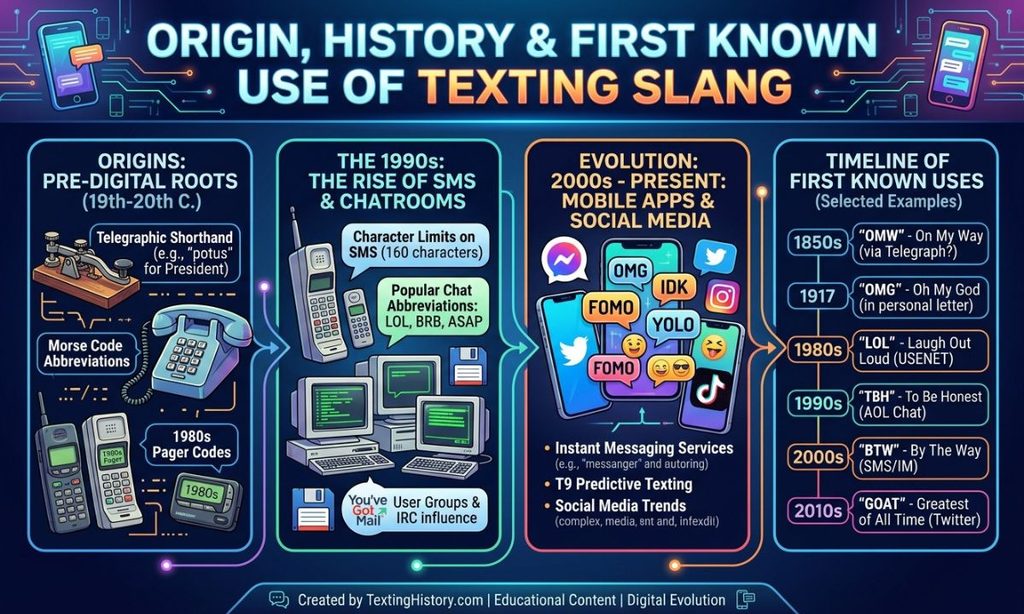
Texting slang did not start with smartphones. It began with early mobile phones and pagers in the 1990s, when people had to pay per character or had a small screen to type on.
Terms like LOL and BRB come from early internet chat rooms in the 1980s and 1990s. People used these shortcuts on platforms like IRC (Internet Relay Chat) long before texting existed on phones.
When SMS texting became popular in the early 2000s, these chat-room shortcuts moved into phone messages. Phones back then also had limited character space, so short forms became even more useful.
Today, slang keeps growing with new apps. Every platform adds its own style of texting terms, and this trend has never really stopped since the 1990s.
How People Use Texting Terms in Daily Conversations
Texting terms change meaning depending on the mood of the chat. Here are five common conversation types and how terms shift inside them.
Casual Conversation
In a casual chat, terms are used loosely. A girl might type “lol” or “haha” often, just to keep the mood light. It does not always mean something is truly funny.
Friendly Conversation
Friendly chats use warmer terms. Words like “np” (no problem) or “ofc” (of course) show comfort and ease between two people who know each other well.
Uncertain Conversation
When a girl is unsure or avoiding a topic, she may use short replies like “idk” or “maybe.” These terms often signal she needs more time or does not want to commit to an answer.
Agreement
Simple agreement often shows up as “k,” “sure,” or “yeah.” These are quick and to the point, though tone can make them feel warm or cold.
Short Response
Very short replies like “k” or “ok” without extra words can mean she is busy, distracted, or simply not in a talkative mood at that moment.
“Meaning in Text From a Girl” Across WhatsApp, Instagram, TikTok & Snapchat
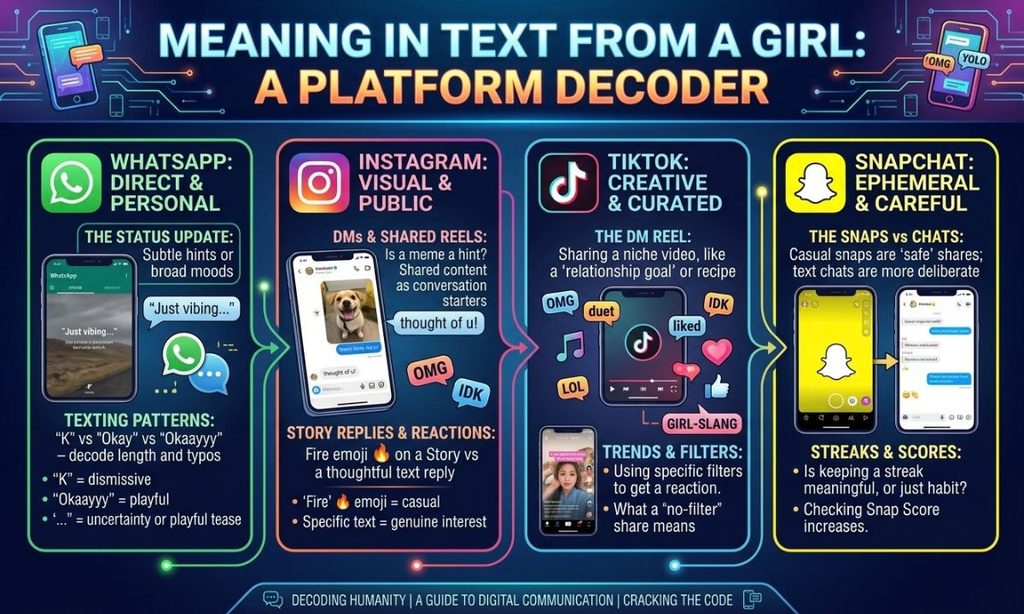
Texting style also changes based on the app being used. Each platform has its own culture and speed of conversation.
WhatsApp chats tend to be longer and more personal. Read receipts (blue ticks) add pressure, so a slow reply here often feels more noticeable than on other apps.
On Instagram, texting often happens through DMs and story replies. Messages here are usually shorter and more casual, mixed with emojis and reaction stickers.
TikTok
TikTok messages are often tied to shared videos. A girl might comment on a video before sending a direct message, so the chat often starts around shared interests.
Snapchat
Snapchat is built around quick, disappearing messages. Streaks and fast replies matter more here, so texting terms are often shorter and used to keep the chat moving.
Different Meanings of Texting Expressions in Other Fields
Some texting terms are not only used in casual chats. They also appear in business, gaming, and school settings, with slightly different meanings.
- Business texting: Terms like “k” or “np” are used for quick confirmations between coworkers.
- Gaming chats: Words like “gg” (good game) or “afk” (away from keyboard) are common, mixing with everyday slang.
- School group chats: Students often use “idk” or “hmu” when planning homework or study groups.
Quick Rule
If the same term appears in a work or study setting, it usually carries a simple, practical meaning. In personal chats, the same term can carry more emotional weight.
Common Confusions, Mistakes & Wrong Interpretations
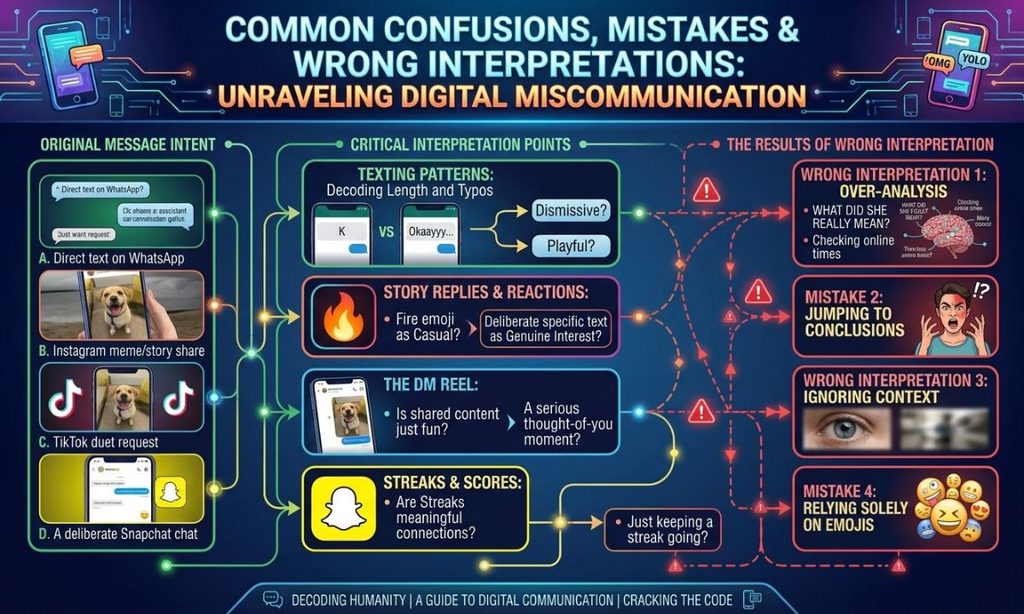
Many people misread texts because they forget one key rule: words alone do not show tone. Here are common mistakes people make.
- Assuming a short reply means anger. Sometimes it just means she is busy.
- Reading too much into “lol.” It is often just a habit, not real laughter.
- Ignoring response time. A slow reply does not always mean disinterest.
- Overanalyzing punctuation. A period at the end of a text does not always mean she is upset.
- Comparing her texting style to someone else’s. Every person texts differently, and comparing leads to wrong conclusions.
Avoiding these mistakes helps you read her messages more fairly and accurately.
Similar Terms, Alternatives & Related Slang
Texting slang keeps evolving, and many terms overlap in meaning. Knowing related terms helps you understand the full picture of modern texting.
- “Bet” – means agreement, similar to “ok” or “sure.”
- “Fr” (for real) – used to confirm something is true.
- “Ngl” (not gonna lie) – used before an honest opinion.
- “Ily” (I love you) – used casually among close friends too, not always romantic.
- “Tbh” (to be honest) – signals a direct, sincere reply.
Learning these related terms makes it easier to follow fast-moving conversations without confusion.
Examples of “Meaning in Text From a Girl” in Real Chat Situations
Real examples make these terms easier to understand. Here are six common ones and what they usually mean in context.
Example 1: “LOL”
She sends: “lol yeah that’s true.” This usually shows light agreement, not necessarily something funny. It softens the reply and keeps the tone friendly.
Example 2: “WBU?”
She sends: “I’m good, wbu?” This is a clear sign she wants to keep the conversation going. She is turning the question back to you with genuine interest.
Example 3: “IDK”
She sends: “idk, maybe later.” This often means she is unsure or not ready to commit to plans yet. It is not usually a rejection, just hesitation.
Example 4: “OFC”
She sends: “ofc I’ll be there!” This shows confidence and excitement. It is a strong, positive confirmation, more enthusiastic than a plain “yes.”
Example 5: “K”
She sends just: “k.” Without more context, this can feel flat. It may mean she is busy, distracted, or the conversation has naturally reached its end.
Example 6: “HAHAHA”
She sends: “HAHAHAHA no way!” Longer laughing text usually shows real amusement. The more letters, the more genuine the reaction often feels.
How to Reply When a Girl Says a Texting Term
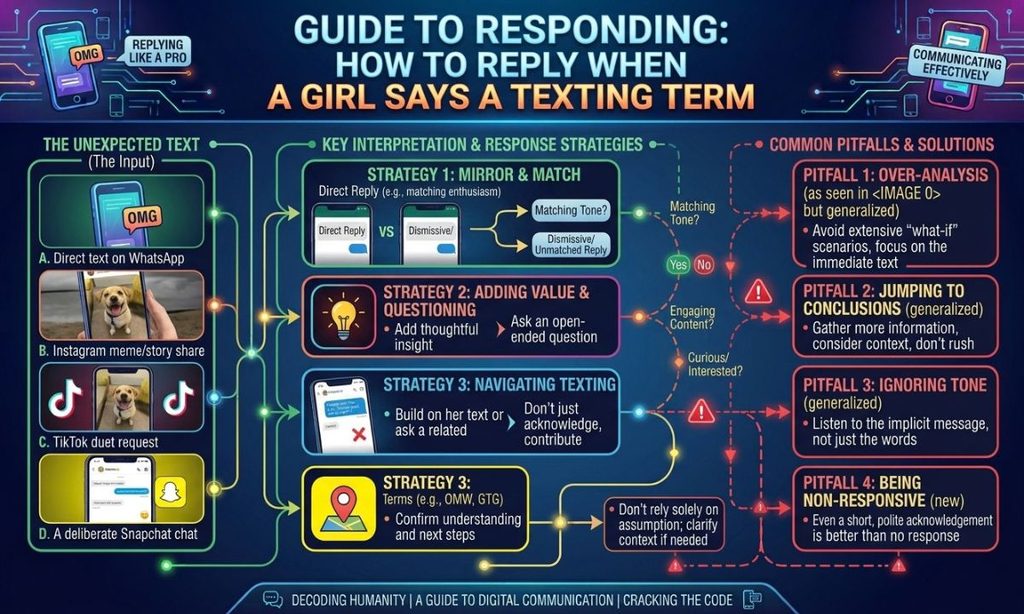
Knowing how to respond well keeps the conversation natural and comfortable. Here are simple ways to reply to common terms.
If she says “LOL”: Match her energy. A short, light reply keeps the mood easy without overthinking it.
If she says “WBU?”: Answer honestly and ask a follow-up question. This shows you are interested in the conversation too.
If she says “IDK”: Give her space. Suggest a simple option instead of pushing for an immediate answer.
If she says “HMU”: Reach out when you are free. This is an open invitation, so a relaxed follow-up message works well.
If she says “Ofc”: Reply with enthusiasm. She has already shown excitement, so matching that tone keeps things positive.
If you’re unsure what she means: Ask a simple, direct question. It is always better to ask than to guess wrong.
Is “Meaning in Text From a Girl” Still Popular? Trends & Online Usage
Texting slang is more popular than ever. With social media and messaging apps growing every year, new terms appear constantly, and old ones keep changing meaning.
Younger users especially drive new slang trends, often starting on TikTok or Instagram before spreading to other apps. This constant change keeps texting culture active and always evolving.
Don’t Confuse Slang with Romantic Interest
One important point to remember: slang alone does not confirm romantic feelings. A girl may use warm or playful texting terms with friends, family, and people she likes in a completely non-romantic way too.
The real signs of interest come from consistency, effort, and how she treats the conversation over time — not from a single word or emoji. Slang is a texting habit, not a confession of feelings.
Final Words
Texting is a small window into how someone feels, but it is never the whole picture. Words like “lol,” “k,” or “idk” carry different weight depending on the person, the platform, and the moment.
The best way to understand any text from a girl is to look at patterns over time, not single messages. Tone, timing, and consistency tell a much clearer story than any one word ever could.
At the end of the day, texting is just one part of communication. When in doubt, a simple, honest question will always give you a clearer answer than guessing ever will.
“FAQs”
What does it mean when a girl texts “LOL”?
It usually means light amusement or agreement, not always real laughter. Girls often use it to soften a reply or keep the tone friendly and casual.
Does a short reply mean a girl is not interested?
Not always. A short reply like “k” or “ok” often just means she is busy or distracted, not upset or uninterested.
What does “ofc” mean when a girl texts it?
“Ofc” means “of course,” showing quick, confident agreement. It usually carries a positive, enthusiastic tone in the conversation.
What does “WBU” mean in a text?
“WBU” means “what about you,” used to turn a question back to you. It shows she wants to keep the conversation going.
What does “idk” mean from a girl?
“Idk” means “I don’t know,” often used when she is unsure or not ready to give a full answer. It is usually hesitation, not rejection.
Can emojis change the meaning of a text?
Yes, emojis add tone that plain words cannot show. The same sentence can feel warm or sarcastic depending on the emoji used.
How can I know what a girl really means in a text?
Look at her tone, timing, and pattern over several messages. If it’s still unclear, a simple, direct question works best.

Hi, I’m Shahid, a passionate content writer and blogger dedicated to creating easy-to-understand, well-researched, and SEO-friendly content. I specialize in explaining the meanings of words, phrases, names, internet slang, symbols, and everyday expressions in a simple and engaging way.