
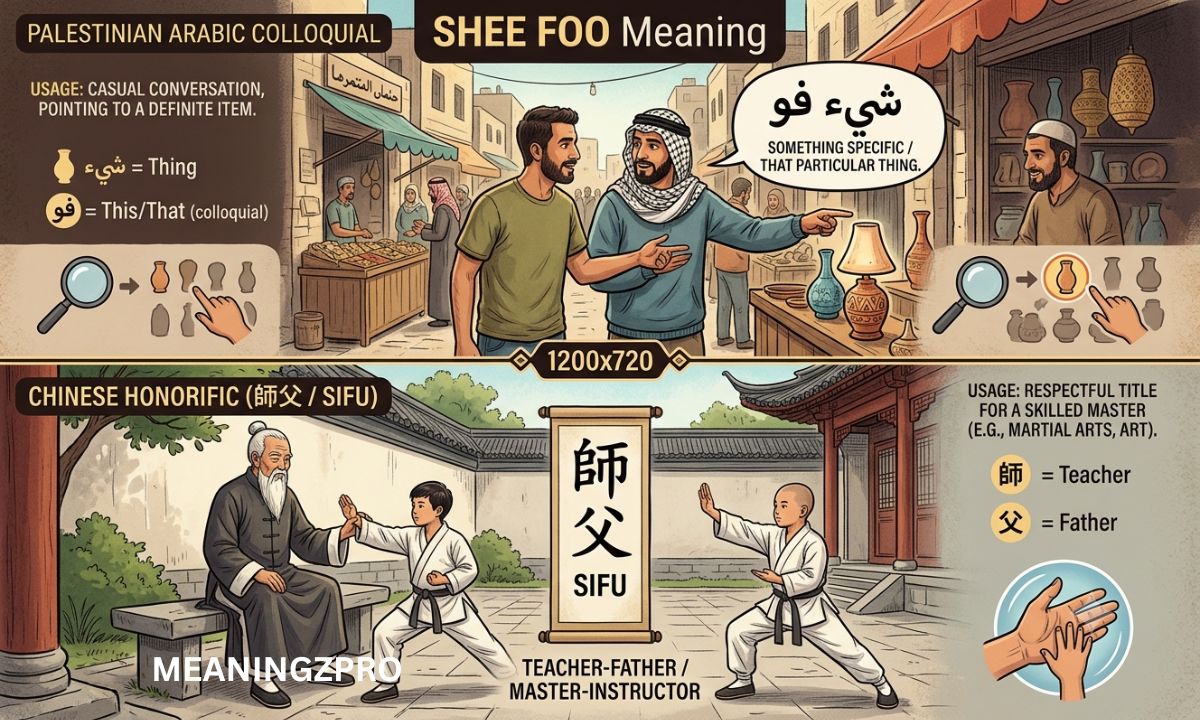
Have you heard someone say “shee foo” and felt lost? You are not alone. Many people search for this phrase online. They want to know what it really means.
This word comes from spoken Arabic. It is not a formal word. You will not find it in textbooks. People use it in daily talk, on the street, and with friends.
The phrase got extra attention from Netflix. The show “Mo” uses Arabic slang like this often. Fans of the show got curious. They started asking about the real meaning behind it.
In this guide, we break it down simply. You will learn what “shee foo” means. You will see how people use it. You will also learn why it feels so popular right now.
What Does Shee Foo Mean? (Quick Answer)
“Shee foo” is a funny phrase from the Netflix show “Mo.” A character named Hameed says it a lot. He thinks it means “yes” or “okay.”
But here is the twist. Hameed misheard the English words “shit, fool.” He turned them into his own version: “shee foo.” It sounds like Arabic, but it is not.
Many people online think “shee foo” is a real Arabic word. That is not true. It is a made-up phrase from a TV show, born out of a funny mistake made by one character.
This mix-up is exactly why the phrase spread online. It sounds foreign and cool. It came from a comedy scene. And it grew into a joke that fans now use in their own daily chats, even outside the show.
| Question | Quick Answer |
| Is shee foo Arabic? | No, it is not a real Arabic word |
| Where does it come from? | The Netflix show “Mo” |
| Who says it? | The character Hameed |
| What does Hameed think it means? | “Yes” or “okay” |
| What did he actually mishear? | “Shit, fool” |
| Is it used in real life by Arabic speakers? | No |
Breaking Down the Phrase: Shee + Foo

Let’s look at the two small parts of this phrase. Each part came from real English words. Hameed just heard them wrong, and his version stuck.
- “Shee” comes from the word “shit.” Hameed’s accent softened the sharp sound at the end.
- “Foo” comes from the word “fool.” He dropped the “l” sound at the end, which made it shorter and smoother.
Put together, “shit, fool” turns into “shee foo.” It happens fast in casual speech. If you say “shit, fool” quickly and softly, you can hear how it slides into “shee foo.”
This kind of sound-blending happens all the time in real life. New English learners often hear phrases differently than native speakers do. Sounds get mixed. Meanings get changed. Sometimes a whole new phrase is born by accident.
Hameed’s character shows this in a funny and very human way. He is not trying to be silly. He genuinely believes “shee foo” is a normal thing people say. That innocent confidence is what makes the moment land so well with viewers.
Many comedians use this kind of language mix-up in their writing. It feels real because it happens in real immigrant communities every day. Words travel between languages, and sometimes they land somewhere completely new.
Shee Foo Meaning in English Slang
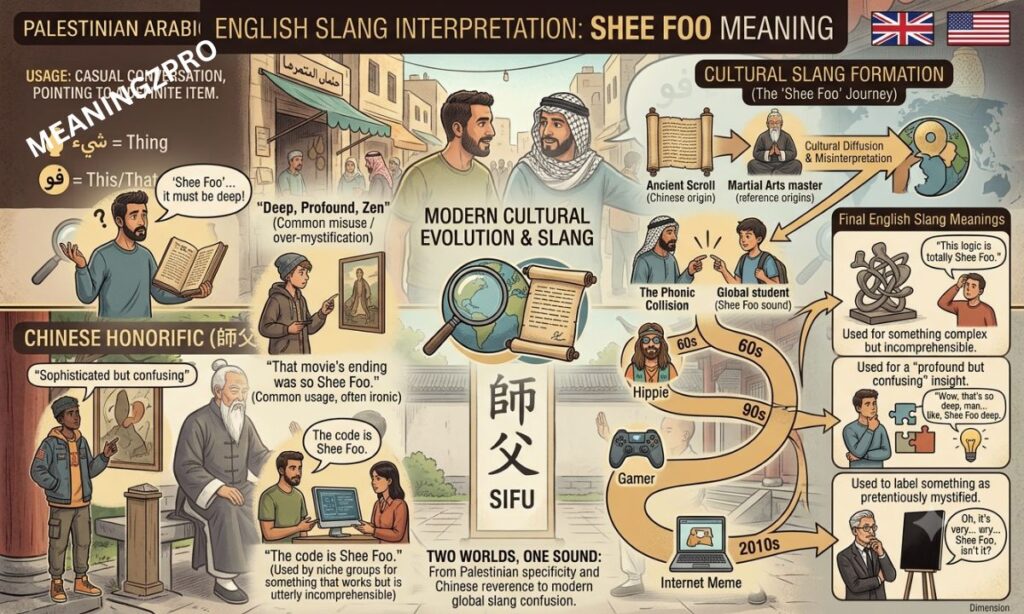
After the show became popular, fans turned “shee foo” into slang. People now use it as a playful way to say “yeah” or “sure, whatever.”
Here is how fans use it today:
- As a funny reply when someone says something obvious
- As a joke greeting between friends
- As a way to copy Hameed’s confident, chill energy
- As a caption on funny videos or memes
- As a light way to end an argument, similar to saying “whatever, man”
The slang meaning is not really about Arabic at all. It is about copying a funny TV moment. People enjoy saying it because it feels light, silly, and easy to drop into casual talk.
Slang like this usually has a short life online. It spreads fast through short clips, then slowly fades as people move on to the next trend. But while it lasts, it becomes a fun shortcut between people who share the same pop culture reference.
Some fans even use it as a nickname for a friend who often says confusing things with total confidence, just like Hameed does in the show. That is the heart of internet slang: taking one small moment and stretching it to fit many situations.
Shee Foo in Palestinian Arabic: Cultural Context
Some articles claim “shee foo” is real Palestinian Arabic. This is false. It does not exist in Palestinian Arabic or in any other Arabic dialect.
The show “Mo” does use real Palestinian Arabic in many scenes. The main character, Mo Najjar, is Palestinian-American. He often switches between English and Arabic, which is common for many immigrant families raising children in the United States.
But “shee foo” is different. It is not part of that real Arabic dialogue. It comes from Hameed, a character who does not speak Arabic as his first language and who mishears an English phrase instead.
So the cultural context here is not about Arabic language at all. It is about how people from different backgrounds sometimes hear new languages in surprising ways. That mix of cultures, accents, and misunderstandings is exactly what makes the show feel honest and real.
Shows like “Mo” work hard to show real bilingual family life. Characters flip between languages mid-sentence. Parents speak Arabic to their kids, while the kids answer back in English. This back-and-forth style is called code-switching, and it happens in millions of homes around the world.
“Shee foo” fits into this world as a comic side note, not as a real piece of the culture. It reminds viewers that language learning is messy, funny, and full of small, harmless mistakes.
Shee Foo Meaning Arabic
Let’s answer this clearly: shee foo has no meaning in Arabic. It is not a word in Modern Standard Arabic. It is not slang in Palestinian, Egyptian, Gulf, or any other Arabic dialect.
Some websites made up a fake Arabic meaning for this phrase. They claim “shee” means “thing” and “foo” is an emphasis word used to point at something specific. This sounds smart and detailed, but it is not accurate. Real Arabic speakers do not use “shee foo” this way in daily conversation.
The confusion likely started because the phrase sounds like it could be Arabic. The show is about an Arab family living in Texas. So people searching online naturally guessed the phrase was Arabic slang. It is an understandable guess, but it is simply wrong.
If you ask a native Arabic speaker what “shee foo” means, most will have no idea. Some may laugh because, to them, it just sounds like English with an accent, not like any word in their own language.
This is a good reminder for anyone learning new words online. Not everything trending on social media has a deep or ancient meaning. Sometimes a phrase is popular simply because it made people laugh once, and the internet never forgot it.
Shee Foo Meaning in English
In English, “shee foo” has no dictionary meaning either. It only means something inside the story of the show, and only because one character decided it does.
Inside the show, Hameed uses it to mean:
- “Yes”
- “I agree”
- “That’s right”
- “No problem”
- “Sounds good”
He says it with full confidence, even though the phrase actually came from him mishearing an insult aimed at someone else. That gap between what he thinks it means and what it truly means is the whole joke behind the scene.
This is a classic comedy trick called dramatic irony. The audience understands something the character does not. Viewers know Hameed is unknowingly repeating a rude phrase, but Hameed himself has no clue. That gap between knowledge and confidence is exactly what makes people laugh.
Because the joke works so well, fans have kept the phrase alive long after the episode aired. In English conversations today, it usually shows up as a playful nod to the show, not as a phrase with any real dictionary definition.
Shee Foo Meaning MO in English
“Mo” is the name of the Netflix show. It stars comedian Mo Amer. He plays a character named Mo Najjar.
Within the world of “Mo,” the phrase “shee foo” pops up as a running joke tied to Hameed’s character. Fans often search “shee foo meaning Mo” because they watched the show and want to understand the joke clearly.
In simple English, here is the full picture:
- The show is called “Mo.”
- The main character is Mo Najjar, played by Mo Amer.
- A side character named Hameed says “shee foo.”
- Hameed believes it means “yes.”
- It is really a funny mishearing of an English insult.
The show itself blends comedy and real drama. It touches on serious topics like immigration status, family pressure, and starting over in a new country. The lighter moments, like Hameed’s mishearing, give the audience a break from the heavier parts of the story.
That balance between funny and serious is part of why “Mo” earned praise from critics and viewers. Small jokes like “shee foo” work so well because they sit inside a much bigger, more heartfelt story.
How It Sounds: Pronunciation Guide
Pronunciation is simple once you break it down. Say each part slowly, then blend them the way Hameed does in the show.
| Part | Sounds Like |
| Shee | “she,” rhymes with “tea” |
| Foo | “foo” like in “food,” without the “d” sound |
| Full phrase | “SHEE-foo,” said fast and smooth |
Try saying “shit, fool” quickly, then soften the “t” sound and drop the “l” at the end. You will land close to “shee foo.” That is exactly how the character says it in the show, almost like the two words melt into one.
A helpful trick is to say the phrase quietly, almost under your breath, the way people mumble casual phrases in real conversation. The softer you say it, the closer it sounds to the version in the show.
Non-native English speakers often shape words this way. Sounds that feel harsh in one language get softened to match sounds that feel more familiar. This is completely normal, and it is part of what makes real speech patterns interesting to study.
Shee Foo in the Netflix Show “Mo” — The Pop Culture Connection
“Mo” is a comedy-drama series created around comedian Mo Amer’s own life story. It follows Mo Najjar, a Palestinian refugee living in Houston, Texas. The show mixes humor with real struggles about identity, family, and immigration status.
Hameed is a side character in the show. He works with Mo at a restaurant. Hameed speaks English as a second language, and his lines create some of the show’s funniest and most memorable moments.
The “shee foo” moment happens in a casual restaurant scene. Hameed uses the phrase like it is totally normal conversation. He says it with a straight face, which makes it even funnier for viewers who catch the real meaning hiding behind it.
This kind of humor works because it feels real. Many people who speak more than one language have mixed up words before, or heard a phrase wrong and used it confidently anyway. Viewers connected with that very human feeling, and the phrase spread quickly across social media.
The show earned strong reviews for blending comedy with honest storytelling about refugee life. Small character moments, like Hameed’s confident mistake, help balance out the heavier themes running through the main story. That mix of light and serious moments is part of what made “Mo” stand out from other comedy shows.
The Hameed Moment — Why It Became a Talking Point
Right after the episode aired, clips of Hameed saying “shee foo” spread across social media platforms. Short video clips are easy to share, and funny lines travel fast once people start clipping and reposting them.
A few reasons the moment became so popular:
- The delivery was confident and deadpan, which made the mistake funnier
- Viewers loved the twist once they understood the real meaning behind the phrase
- Many fans wanted a whole spin-off show built around the Hameed character
- The actor’s comic timing made the scene stick in people’s minds
- The phrase was short and easy to repeat, which helped it spread fast online
People began quoting the line in comments, video captions, and casual chats with friends. It became one of those small TV moments that turns into a much bigger online joke, far beyond the original episode.
Fans on social media often praised the actor who plays Hameed for stealing scenes with small, well-timed lines like this one. Many comments online asked for more screen time for his character in future seasons, showing how much impact one funny moment can have on a show’s popularity.
Shee Foo in Online Slang and Social Media
Once “shee foo” hit social media, it took on a life of its own, far beyond the original TV scene. Fans on platforms like TikTok and Instagram started using it in totally new ways.
Common online uses include:
- Adding “shee foo” as a caption under unrelated funny videos
- Using it as a comment to show playful agreement
- Making fan edits and tribute clips about the Hameed character
- Turning it into a general reaction meme, similar to other TV catchphrases
- Using it in memes about mishearing or misunderstanding someone
This kind of trend is common with popular shows. A small line becomes a shared joke among fans. People use it even if they have never watched the full episode, simply because it feels fun to say and instantly recognizable to other fans.
Social media trends like this often move fast. A phrase can peak in popularity within a few weeks, then slowly fade as a new trend takes its place. Still, phrases tied to a well-loved character, like Hameed, tend to stick around longer in fan communities, showing up again whenever a new season is released.
How and When to Use Shee Foo Correctly
Since “shee foo” is not real Arabic or standard English, using it correctly mostly means using it the way fans do, as a light joke tied to the show.
Good times to use it:
- Chatting casually with friends who have watched the show
- Making light jokes online or in group chats
- Reacting to something obvious, in a playful, joking tone
- Adding it as a caption on a funny clip or meme
Times to avoid it:
- In formal writing or professional settings
- When speaking with someone who actually speaks Arabic, since it might cause confusion
- In language-learning contexts, since it is not a real Arabic phrase
- In serious conversations where a joke might feel out of place
Think of it like an inside joke from a TV show. It works best among people who already know the reference, and it can feel confusing to anyone who has never seen the scene. Context matters a lot with slang like this.
Common Misconceptions About Shee Foo
There is a lot of wrong information about this phrase spreading online. Let’s clear up the biggest mistakes people make.
| Misconception | The Truth |
| Shee foo is a real Arabic word | False, it does not exist in any Arabic dialect |
| Shee foo means “a specific thing” | False, this meaning was made up by some websites |
| Mo Najjar is the one who says shee foo | False, it is the character Hameed |
| Shee foo appears in the Quran or old Arabic texts | False, there is no such connection |
| Shee foo is used daily by Arabic speakers | False, real Arabic speakers do not use this phrase |
| Shee foo and Shifu from Kung Fu Panda are related | False, they come from completely different sources |
The real story is simpler and funnier than these claims. It comes from one character mishearing an English insult, not from deep Arabic roots or ancient wisdom.
It is worth being careful with information found online, especially about language and culture. Many articles copy each other without checking facts, which is how false claims about “shee foo” being real Arabic spread so widely in the first place.
Shee Foo and the Broader Value of Learning Arabic Colloquialisms
Even though “shee foo” itself is not real Arabic, the show “Mo” still teaches viewers a lot about real Arabic culture and language. That part of the show is genuinely worth paying attention to.
Learning real Arabic colloquial phrases can help you:
- Understand shows and movies that feature Arabic-speaking characters
- Connect better with Arabic-speaking friends, neighbors, or coworkers
- Appreciate how language mixes and changes inside immigrant communities
- Avoid mixing up real phrases with made-up internet trends
- Build a deeper respect for the culture behind the language
If you enjoyed learning about “shee foo,” it is a good moment to explore real Arabic words too. Real colloquial Arabic is rich, warm, and full of expressions that carry deep cultural meaning, far more than a funny mishearing from a sitcom scene.
Many language learners find that watching shows like “Mo” is a fun starting point. Even though “shee foo” is not real, other lines in the show do use authentic Arabic, giving curious viewers a natural way to start picking up real words and phrases.
Mo Najjar Shee Foo Meaning
Many people search “Mo Najjar shee foo meaning” thinking the main character says the phrase himself. This is a common mix-up worth fixing clearly.
Here is the correct breakdown:
- Mo Najjar is the show’s main character, played by comedian Mo Amer.
- Hameed is a different character, a coworker and close friend of Mo.
- Hameed, not Mo Najjar, is the one who actually says “shee foo.”
Mo Najjar’s story focuses on his life as a Palestinian refugee trying to build a stable future in Texas. Hameed’s storyline leans more toward comic relief, bringing lightness to the show’s more serious moments.
The “shee foo” line belongs to Hameed’s character arc, not Mo’s. Understanding this small detail helps clear up a lot of the confusion floating around online, especially in comment sections and social media captions that wrongly credit the line to the main character.
Shee Foo Kung Fu Panda
Some people confuse “shee foo” with “Shifu” from the movie “Kung Fu Panda.” These are two completely different things, coming from two completely different worlds.
Here is the difference:
| Shee Foo | Shifu |
| From the Netflix show “Mo” | From the “Kung Fu Panda” movies |
| A mishearing of “shit, fool” | A real title meaning “teacher” or “master” in Chinese |
| Used as internet slang, not a real word | A real word used in Chinese martial arts culture |
| Said by the character Hameed | Used as the name for Master Shifu, a kung fu teacher |
The mix-up happens because the two words sound a little alike when said quickly. But they come from totally different shows, cultures, and languages, with no real connection between them at all.
“Shifu” is an old and respected word in Chinese martial arts, often used to address a skilled teacher or master. “Shee foo,” on the other hand, is a brand-new joke from an American comedy series, created entirely by accident through one character’s mishearing of English.
If you search online for one and accidentally find results about the other, now you know why. They simply sound similar, but they mean two very different things from two very different corners of pop culture.
This kind of mix-up is actually common with short, catchy words. When two phrases share similar sounds, search engines and social media algorithms sometimes group them, even though they have nothing in common. Knowing the real background of each word helps you avoid spreading the confusion further.
It also shows how pop culture references can travel in strange ways. A martial arts title from Chinese tradition and a mishearing from an American sitcom ended up crossing paths online purely by accident, simply because of how they sound when spoken quickly.
Why the Confusion Around Shee Foo Keeps Spreading
It helps to understand why so many websites got the story wrong in the first place. Once one article claimed “shee foo” was real Arabic slang, other sites copied the same idea without checking it.
This happens a lot online:
- One article publishes a guess or a made-up detail
- Other websites copy that detail without checking if it is true
- Search engines start showing the same wrong information everywhere
- Readers assume it must be true because so many pages repeat it
This pattern is common with viral phrases, especially ones tied to TV shows or movies. The real story often gets buried under repeated guesses that sound convincing but are simply not accurate.
Knowing the real origin of “shee foo” helps you spot this pattern elsewhere too. Whenever a word or phrase suddenly goes viral, it is worth checking where it truly came from before repeating any claims about its meaning.
FINAL THOUGHTS
Now you know what “shee foo” means. It comes from Arabic. It points to something specific, like “that thing” or “a certain item.”
This phrase is casual and easy to use. You will hear it in daily talk, on shows like “Mo,” and among Arabic speakers everywhere. It adds warmth to a conversation.
Next time you hear “shee foo,” you will understand it right away. Try using it yourself. It’s a small phrase, but it opens a real window into Arabic culture.
Frequently Asked Questions
What does shee foo mean in Arabic?
It has no real meaning in Arabic. It’s not a word in any Arabic dialect.
What does shee foo mean in the show “Mo”?
It’s Hameed’s mishearing of “shit, fool.” He uses it to mean “yes” or “okay.”
Is shee foo Palestinian Arabic?
No. It doesn’t exist in Palestinian Arabic or any real Arabic dialect.
How do you pronounce shee foo?
Say it “SHEE-foo,” blending “she” and “foo” quickly and softly.
Is shee foo offensive?
It comes from a censored curse word, but as used online, it’s meant as a harmless joke.
Why did shee foo go viral?
Hameed’s confident, deadpan delivery made the mishearing funny, and clips spread fast on social media.
Can non-Arabic speakers use shee foo?
Yes. It’s internet slang from a TV show, not a real Arabic phrase tied to native speakers.
What is the difference between shee foo and Modern Standard Arabic?
Shee foo is a made-up English mishearing. Modern Standard Arabic is the real, formal Arabic language.

Hi, I’m Shahid, a passionate content writer and blogger dedicated to creating easy-to-understand, well-researched, and SEO-friendly content. I specialize in explaining the meanings of words, phrases, names, internet slang, symbols, and everyday expressions in a simple and engaging way.