
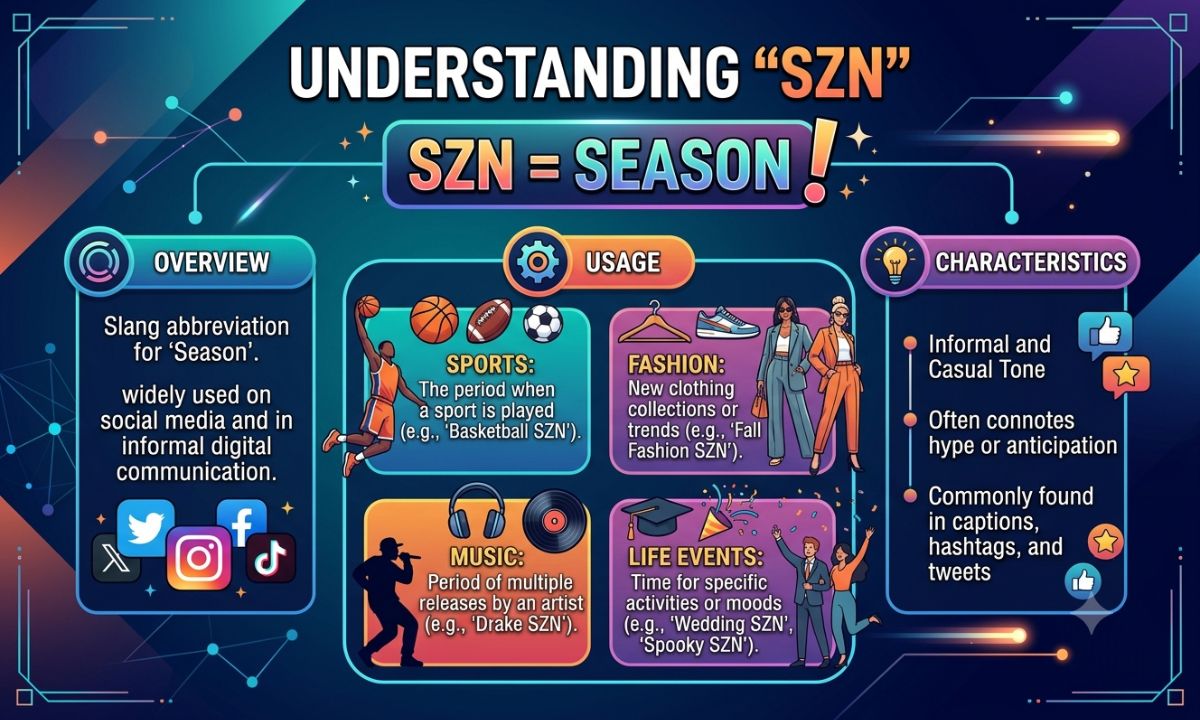
SZN is a short way to write the word “season.” People use it a lot online, especially on social media. You will see it in captions, tweets, and comments. It saves time and space when typing. Many young people use this short form every day.
The word became popular because of texting and internet slang. People often drop vowels to make words shorter and quicker to type. “Season” became “SZN” in the same way. It started showing up in sports talk and fashion posts. Soon, it spread across many online communities.
Today, people use SZN in different ways. Sports fans write things like “football SZN” to show excitement. Fashion lovers use it for “summer SZN” or “fall SZN.” It can also mean a time period for anything special, like “exam SZN” or “holiday SZN.” This word keeps growing in popular culture.
What Does SZN Mean?
SZN means “season.” It is a short form that people type instead of the full word. You will see it on Instagram, TikTok, Twitter (X), and Snapchat almost every day.
People use SZN to talk about a time of year or a special period for something. It could be a season on the calendar, like summer or winter. It could also be a season for an activity, like football or dating.
Here is the simple breakdown:
| Term | Meaning |
| SZN | Short form of “season” |
| Type of word | Internet slang/abbreviation |
| Common use | Social media captions, texts, sports talk |
| Pronunciation | Same as “season” |
Pro tip: SZN is always written in capital letters. Writing it in lowercase (szn) is also common in texts, but capital letters look better in titles and captions.
SZN Mean in Text & Slang
In texting, SZN is used the same way people use other shortcuts like “BRB” or “TBH.” It saves time and looks casual.
Here are a few common ways people use it in texts:
- “It’s finally sweater SZN 🍂”
- “Back to school SZN is here”
- “This is my SZN to shine”
Notice that SZN often comes with an emoji. This is a small trick that makes the message feel more fun and adds context. A leaf emoji means fall. A snowflake means winter. A heart means cuffing season (we will explain that below).
Real talk: I have noticed that SZN works best in short, punchy sentences. It does not fit well in long, formal writing. It belongs in captions, texts, and quick posts, not in essays or business emails.
Origins of SZN: Where Did It Come From?
SZN did not appear overnight. It grew out of a bigger habit online called vowel dropping. This means people remove vowels (a, e, i, o, u) from words to make them shorter and quicker to type.
Other examples of this habit include:
- “Fam” for family
- “Bday” for birthday
- “Plz” for please
Season lost its vowels and became SZN. This style became common on Twitter in the early 2010s, when people had a character limit and needed to say more in fewer letters.
Sports culture also helped spread the word fast. Fans and players used SZN to talk about the football, basketball, or baseball season. Hip-hop and fashion culture picked it up too, and soon it became part of everyday internet language.
Quick timeline:
- Texting culture (2000s) — Short forms become normal.
- Twitter era (2010s) — Character limits push people to shorten words.
- Sports and hip-hop (2012–2016) — SZN becomes tied to football season and music drops.
- Mainstream social media (2017–today) — SZN spreads to fashion, weddings, and daily life.
SZN in Different Contexts: From Sports to Social Media
SZN is not just one word with one meaning. Its meaning changes depending on where and how it is used. This is called context, and it is the key to understanding slang.
Here is a simple table to show how the meaning shifts:
| Context | What SZN Means There |
| Sports | The playing season of a team or league |
| Fashion | A time of year tied to certain clothing styles |
| Weddings | The months when most weddings happen |
| Dating | A period when people look for relationships |
| Holidays | The festive time of year |
| Music | The release period of an album or song |
This flexibility is why SZN became so popular. People can attach it to almost anything that has a cycle or a repeating time period.
SZN in Sports: The Ultimate Game Changer
Sports fans were some of the first big users of SZN. In sports, SZN simply means the official playing season of a game.
You will hear it in phrases like:
- “Football SZN is back!”
- “It’s playoff SZN, let’s go!”
- “Draft SZN got everyone talking”
Why sports fans love it: Sports already run in cycles. Football has a season. Basketball has a season. Baseball has a season. SZN fits perfectly because it is short, exciting, and easy to shout in a tweet or caption.
Pro tip from experience: Brands and sports pages often use SZN in marketing posts because it feels more personal and less corporate. If you run a sports page or team account, using SZN instead of “season” can make your posts feel more relatable to younger fans.
Wedding SZN Meaning
Wedding SZN means the months of the year when most weddings happen. In many countries, this falls between late spring and early fall (roughly May to October), when the weather is warm and outdoor venues look their best.
During wedding SZN, you will notice:
- More wedding hashtags on Instagram
- A rise in bridal shower and engagement posts
- Wedding planners and vendors posting busy schedules
Why this matters for businesses: If you work in weddings — photography, catering, or venue rental — wedding SZN is your busiest and most important time. Planning content and bookings around this period can boost your business a lot.
Cuffing SZN Meaning
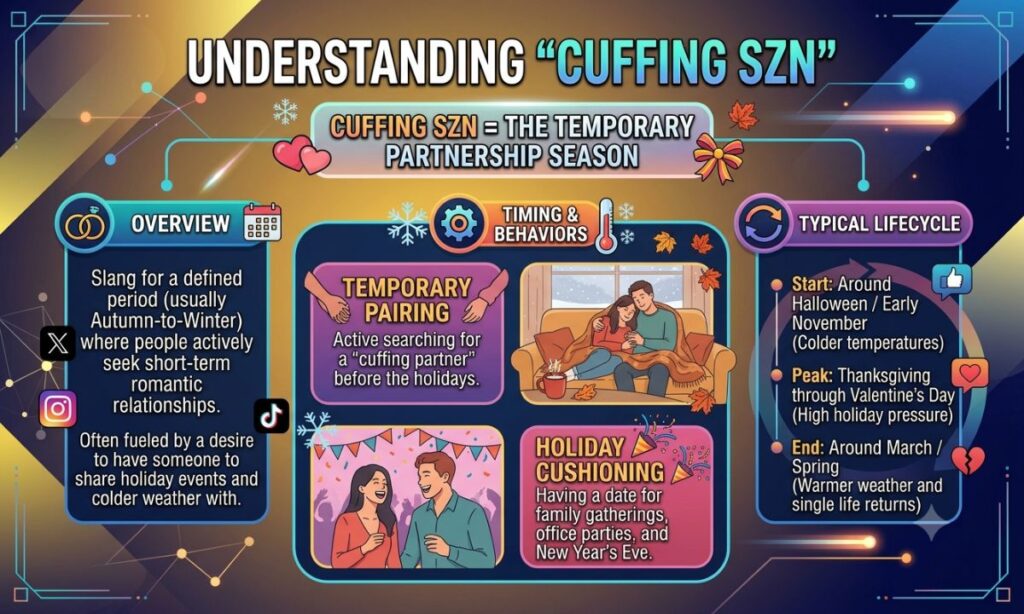
Cuffing SZN is one of the most talked-about versions of this slang. It means the fall and winter months, usually October to February, when people look for a partner to stay warm and cozy with during the cold season.
The word “cuffing” comes from the idea of being “cuffed,” or tied down, to one person instead of staying single.
Here is why cuffing SZN became so popular:
- Cold weather makes people want to stay in rather than go out alone.
- Holidays like Thanksgiving, Christmas, and New Year often involve couples.
- Social media made the term a yearly joke and trend, especially in October and November.
Fun fact: Dating apps often see a spike in activity during cuffing SZN. Many people jokingly blame the cold weather for wanting a relationship, even if it is just for a few months.
SZN in Fashion and Trends: Styling Through the Seasons
Fashion and SZN go hand in hand. Clothing brands, influencers, and shoppers use SZN to talk about seasonal style changes.
Common fashion phrases include:
- “Boot SZN” — fall and winter, when boots come out
- “Bikini SZN” — summer, beach and pool season
- “Layering SZN” — cooler months when jackets and sweaters are needed
Table: Fashion SZN Guide
| SZN Term | Months (Approx.) | Common Items |
| Bikini SZN | June–August | Swimwear, sunglasses |
| Boot SZN | September–November | Boots, jackets |
| Sweater SZN | October–December | Sweaters, scarves |
| Layering SZN | November–February | Coats, hoodies, thermals |
Pro tip: Fashion brands often plan their social media calendar around these SZN terms. Using the right SZN hashtag at the right time helps posts reach the correct audience and trend faster.
SZN as Internet Slang: Memes and Viral Moments
SZN is more than a word now — it is a meme format. People attach “SZN” to almost anything to make it sound funny, dramatic, or exciting.
Examples of meme-style SZN use:
- “It’s crying SZN” (after a sad movie or sports loss)
- “Finals SZN” (school exam stress)
- “Glow-up SZN” (a time of self-improvement)
This shows how SZN moved beyond its original meaning. It now works as a way to exaggerate emotions or announce a phase of life, even if it has nothing to do with weather or sports.
Why this works so well: Memes need short, catchy words. SZN is easy to read, easy to remember, and pairs well with images, videos, and reaction posts. This is a big reason it keeps trending every year.
Popular SZN Examples: Real-World Usage
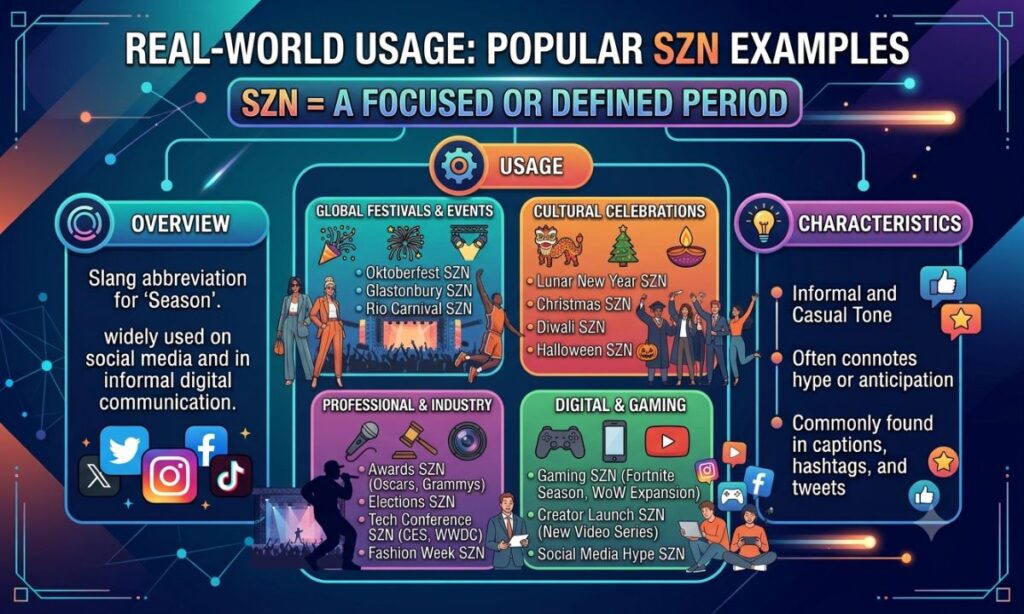
Here is a list of the most common SZN phrases people use today:
- Football SZN — the football season
- Cuffing SZN — fall/winter dating season
- Wedding SZN — spring/summer wedding months
- Spooky SZN — Halloween time
- Comeback SZN — a period of personal growth or return to form
- Finals SZN — school exam period
- Holiday SZN — Thanksgiving through New Year
- Bikini SZN — summer
Real-life example: A small business owner might post, “New products just dropped — it’s glow-up SZN for your wardrobe!” This kind of post feels friendly and current, which helps it get more likes, shares, and comments.
How to Use SZN in Text and Social Media?
Using SZN correctly is easy once you understand the pattern. Here are simple steps to use it well:
- Pick the right context — sports, fashion, dating, or general mood.
- Keep the sentence short — SZN works best in quick, casual lines.
- Add an emoji if it fits — this boosts the tone and clarity.
- Use a hashtag if posting publicly — like #CuffingSZN or #WeddingSZN.
- Avoid using it in formal writing — like emails, reports, or resumes.
Do’s and Don’ts Table
| Do | Don’t |
| Use it in captions and tweets | Use it in formal emails |
| Pair it with relevant emojis | Overuse it in every sentence |
| Match it to trending hashtags | Use it in school assignments |
| Keep sentences short and fun | Mix it with very formal words |
Pro tip: If you manage a brand or personal page, try testing SZN-based captions during trending months (like October for spooky SZN). Posts that match the season’s mood usually get more engagement than generic captions.
SZN vs. Season: What’s the Difference?
The biggest question people ask is simple: is there a real difference between SZN and season? The answer is mostly about tone and setting, not meaning.
| Feature | Season | SZN |
| Meaning | A time of year or period | Same meaning, shortened |
| Formality | Formal, standard English | Casual, internet slang |
| Where used | Essays, news, official writing | Texts, captions, social media |
| Tone | Neutral | Fun, trendy, playful |
| Best audience | General/professional readers | Younger, social media users |
In short: use “season” for formal writing, and use “SZN” for casual, fun, online content. Knowing when to switch between the two shows good writing sense.
Spooky SZN Meaning
Spooky SZN means the time around Halloween, usually from early October to November 1st. It is one of the most popular SZN terms every year.
During spooky SZN, people:
- Post Halloween costume pictures
- Decorate homes with pumpkins and spider webs
- Watch horror movies and share reviews
- Use hashtags like #SpookySZN and #HalloweenVibes
Why it trends every year: Halloween already has a fun, spooky theme, and adding SZN makes captions feel more playful. Brands selling costumes, candy, or decorations often use “Spooky SZN” in ads because it feels exciting and current.
Comeback SZN Meaning
Comeback SZN means a period when someone is working hard to improve, return stronger, or bounce back after a setback. This could relate to sports, fitness, career, or personal life.
Examples of comeback SZN use:
- An athlete returning after an injury: “Comeback SZN loading.”
- Someone starting a fitness journey: “New year, comeback SZN.”
- A brand relaunching a product: “We’re back — comeback SZN starts now.”
Why people connect with it: Comeback SZN carries a motivational tone. It is not tied to weather or a calendar month — it is tied to mindset. This makes it popular for fitness pages, motivational posts, and personal growth content.
SZN started as a simple shortcut for the word “season,” but it grew into much more. Today, it shows up in sports talk, fashion trends, wedding planning, dating culture, and even motivational posts. Its short, catchy style fits perfectly with how people communicate on social media.
Final Thoughts
SZN is a short way to write the word “season.” People use it a lot online, especially on social media. You will see it in captions, tweets, and comments. It saves time and space when typing. Many young people use this short form every day. The word became popular because of texting and internet slang, where people often drop vowels to make words shorter and quicker to type.
Today, people use SZN in many ways. Sports fans write things like “football SZN” to show excitement. Fashion lovers use it for “summer SZN” or “fall SZN.” It can also mean a time period for anything special, like “exam SZN” or “holiday SZN.” This word keeps growing in popular culture.
Frequently Asked Questions
What does Birthday SZN mean?
Birthday SZN means the whole month (or week) around someone’s birthday. People don’t just celebrate one day — they celebrate a whole period with parties, gifts, and posts.
What does SZN mean in chat?
In chat, SZN simply means “season.” People use it to talk about a time period, like exam time, sports time, or holiday time. It makes messages short and quick to type.
What does SZN mean on Instagram?
On Instagram, SZN shows up in captions and hashtags. People write things like “Summer SZN 🌞” under photos. It helps posts feel trendy and match popular hashtags.
What does SZN mean on TikTok?
On TikTok, SZN is used in video captions and trending sounds. Creators say things like “Glow-up SZN” or “Cuffing SZN” to match a video theme or trend. It helps videos reach more viewers who search those tags.
What does SZN mean in slang?
In slang, SZN just means “season,” but with a casual, fun tone. It is used for calendar seasons, but also for life phases, moods, or trends, like “Comeback SZN.”
What does SZN mean in country slang?
In country or regional slang, SZN keeps the same meaning, “season,” but it often connects to local activities, like “hunting SZN,” “harvest SZN,” or “rodeo SZN.” The word changes meaning based on what matters in that area.
What does SZN mean in gaming?
In gaming, SZN means a game season — a set period when new content, ranks, or rewards are active. Players say things like “Season 5 SZN” or “Battle Pass SZN” to talk about the current game update cycle.
What does Exam SZN mean?
Exam SZN means the time of year when students are busy studying and taking tests. It’s a stressful period filled with studying, revision, and late nights, often shown with tired or funny memes online.

Hi, I’m Shahid, a passionate content writer and blogger dedicated to creating easy-to-understand, well-researched, and SEO-friendly content. I specialize in explaining the meanings of words, phrases, names, internet slang, symbols, and everyday expressions in a simple and engaging way.